
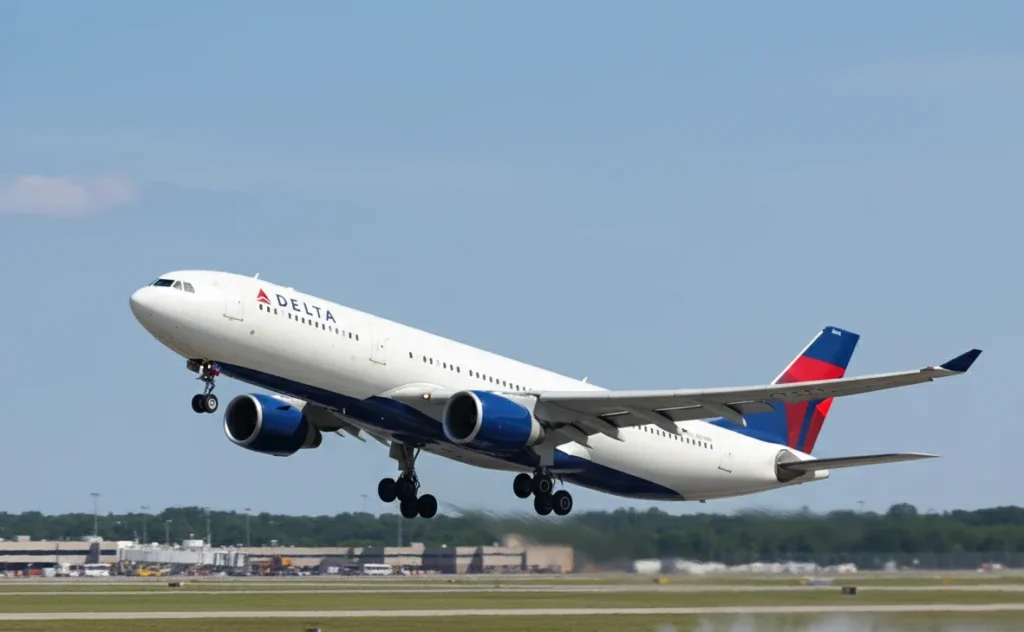

Delta Flight DL275 Diverted LAX is a phrase you might have seen in news feeds, social media, or flight tracking sites. It refers to a long‑haul international flight that abruptly ended its journey with an unscheduled landing at Los Angeles International Airport (LAX). The event raised questions among travelers, aviation enthusiasts, and people planning flights to or from Tokyo and the United States.
This article breaks down what happened, why Delta flight DL275 diverted LAX, the timeline of events, technical considerations, passenger experiences, and the broader implications for long‑distance airline operations. We’ll discuss related aviation terms, coping strategies for passengers, and expert insights into in‑flight decision making. Everything here is written in clear, conversational English with a focus on practical information.
The Story Behind Delta Flight DL275 Diverted LAX
When most people board a long‑haul flight, they expect a routine journey with minimal surprises. That was the case for passengers on Delta flight DL275, which was scheduled to fly from Detroit Metropolitan Wayne County Airport (DTW) in Michigan to Tokyo Haneda Airport (HND) in Japan. It’s a long flight, often more than 13 hours over some of the most remote stretches of the Pacific Ocean.
Instead, about halfway into the journey, something changed. The pilots elected to turn the aircraft around and reroute to Los Angeles International Airport (LAX), thousands of miles from the flight’s original path. That choice made headlines, with many people wondering why the flight was diverted so far from its intended course.
Choosing LAX as the diversion point was unusual. Typically, flights leave from or pass near Anchorage, Seattle, or even Canada on trans‑Pacific routes due to proximity. But in this case, the Airbus A350‑900 carrying the DL275 designation ended up landing on the West Coast.
Passengers on board experienced almost five hours of unexpected altitude before the plan was set off its original path. The safe landing at LAX was not just a logistical decision, it was a safety‑first choice by the flight crew.
Why Delta Flight DL275 Diverted LAX: Technical Issues and Safety Protocols
The biggest factor behind why Delta flight DL275 diverted LAX was not weather or human conflict but a technical concern. According to multiple aviation news reports, the cause was a malfunction in a critical engine system on the aircraft. Specifically, the anti‑ice system on one of the Rolls‑Royce Trent XWB engines showed signs of trouble mid‑flight.
This anti‑ice system plays an essential role in preventing ice buildup on the engine at high altitudes. At cruising altitude, temperatures well below freezing are normal, and ice can form on aircraft structures and engines if protective systems aren’t fully functional. For an Airbus A350 on a trans‑Pacific route, losing anti‑ice capability is not something that can safely be managed over vast open ocean.
Aircraft systems continually monitor parameters like temperature, pressure, and electrical performance. When an alert indicates a possible failure or anomaly, pilots and airline operations teams have to make quick decisions. In this case, the crew determined it was safer to divert to a major airport with the right facilities, and LAX fit that requirement.
The decision to divert was not a sign of imminent danger but a cautious response to maintain safety margins. Technical stops like this are built into airline safety planning. Choosing a diversion point involves factors like runway length, emergency services, maintenance facilities, and passenger care services. LAX is one of Delta’s major hubs and has extensive support services available.
Passenger Experience: What Travelers Went Through
If you were on board Delta flight DL275 diverted LAX, the experience would have felt dramatic. Travelers preparing for an international flight expect a straight route and estimated arrival time. When that changes mid‑air, it can create anxiety, confusion, and, in some cases, frustration.
Passengers told news outlets that once the pilots announced the diversion, people began asking questions about safety and logistics. There were long hours in the air before the decision was finalized, and many passengers had already passed over remote regions where landing options are limited.
After landing at LAX early in the morning, passengers faced a new set of challenges. Most travelers had connections to Tokyo or onward destinations in Asia. They suddenly found themselves in California, far from their original route. In these situations, airlines usually work quickly to rebook passengers on alternate flights, provide hotel accommodations, and offer assistance with visas if needed.
Delta Air Lines also tends to deploy ground teams at diversion airports to help with accommodations, meals, and onward travel plans. While inconvenient, these support systems are designed to reduce additional stress for affected flyers.
How Diversions Like DL275 Affect Airline Operations
When Delta flight DL275 diverted LAX, it didn’t just affect passengers. It also had implications for the airline’s broader scheduling and operations. Long distance flights often use aircraft and crew scheduled for multiple legs. An unplanned diversion means that aircraft is out of position, crew duty times might expire, and passengers on other flights could experience delays or cancellations.
Airlines have contingency plans to handle this. Delta Air Lines teams at both origin and diversion points will typically organize relief crews, reposition aircraft, and update schedules so that customers arrive as close to their planned times as possible. Whether that involves hotel stays or combining passengers onto other flights depends on available options.
Diverted flights also trigger maintenance checks. Once the aircraft reached LAX, mechanics inspected the reported issue and performed tests to determine what corrective actions were needed. That work can take hours or days depending on the severity of the issue.
Aviation Safety and the Future: What DL275 Teaches Us
The case of Delta flight DL275 diverted LAX highlights how complex aviation operations are. Turning back or diverting is never taken lightly. Pilots, engineers, and airline operations teams follow strict safety protocols and coordinate with air traffic control to find the best solution.
Aviation safety advances in large part because of how incidents like this are handled. Even when there is no imminent danger, crews respond to any sign of risk with precaution. These decisions protect passengers, crew, and the aircraft.
Experts say that flying remains one of the safest ways to travel. Modern aircraft are engineered with multiple redundancies and monitoring systems that alert crews long before a problem becomes critical. In the case of DL275, the pilots acted early and decisively.
Related Terms and Concepts
Here are some aviation terms that often come up when a flight like Delta flight DL275 diverted LAX makes news:
ETOPS (Extended Operations): Rules that allow twin‑engine aircraft to fly over remote areas far from suitable landing points. This certification dictates how far a plane can be from a diversion airport.
Diversion Airport: An alternative landing site chosen when a flight cannot continue to its scheduled destination. For DL275, LAX served this role.
Anti‑Ice System: Equipment that prevents ice buildup on critical parts of the aircraft such as engines and wings. A malfunction here can lead to diversion decisions.
These terms help explain why aircraft crews must remain flexible and prioritize safety over sticking to a planned flight path.
Conclusion
The decision to have Delta flight DL275 diverted LAX was the result of a technical concern involving a critical engine system. While it disrupted a long‑haul flight from Detroit to Tokyo, it did so with a priority on safety. Passengers landed safely, crews responded proficiently, and airline teams worked to support travelers throughout the process.
Flight diversions will always attract attention, especially when they involve long distances and major international routes. Understanding why these decisions are made helps put them in context and highlights the level of care that goes into every aspect of airline operations.
Frequently Asked Questions About Delta Flight DL275 Diverted LAX
What exactly happened that caused Delta flight DL275 diverted LAX?
Delta flight DL275 was diverted to Los Angeles due to a malfunction in the anti‑ice system on one of the aircraft’s engines. This system is critical at high altitudes, and pilots decided to land at a major airport where repairs and safety checks could be performed.
Did passengers on Delta flight DL275 diverted LAX land safely?
Yes. All passengers and crew on Delta flight DL275 diverted LAX landed safely at Los Angeles International Airport. The crew’s decision prioritized safety and followed established aviation protocols.
Why not divert to a closer airport instead of LAX?
While closer airports like Anchorage or Seattle are geographically nearer, the crew chose LAX because of its better maintenance facilities and support infrastructure for handling technical aircraft issues.
How does a diversion like this affect travel plans?
When Delta flight DL275 diverted LAX, passengers had to be rebooked onto alternative flights, and some may have received accommodations and meal vouchers. Such disruptions are inconvenient but are managed by airline support teams.
Is it common for flights like DL275 to be diverted?
No. Diversions are relatively rare and usually occur only when safety concerns arise. Airlines and pilots treat them as necessary precautions rather than routine occurrences.